Developing an Autonomous Control System for BRIZO’s Tension Buoy: From the Classroom to Real-World Technology Development
Developing an Autonomous Control System for BRIZO’s Tension Buoy: From the Classroom to Real-World Technology Development

Developing an Autonomous Control System for BRIZO’s Tension Buoy: From the Classroom to Real-World Technology Development
Fred. Olsen 1848's BRIZO floating solar technology has achieved third-party verification from DNV. This milestone enhances its bankability and deployment potential, enabling deployment in challenging nearshore and wave-prone environments.

Fred. Olsen 1848 has completed a successful pilot installation of four Tension Buoy units at EDP Floating PV Lab, enhancing floating solar technology's adaptability in reservoirs. The Tension Buoy's adaptive mooring technology is designed to ensure stability and performance under large water level variations, unlocking the potential for hydro power and floating solar hybridisation.

At Fred. Olsen 1848, we are proud to introduce Tension Buoy, a smart, self-adjusting solution for floating solar installations on dynamic water bodies. By automatically maintaining optimal tension in mooring lines as water levels rise and fall, Tension Buoy keeps floating solar arrays stable, secure, and productive year-round.

As floating offshore wind turbines scale beyond 15 MW, traditional design methods face growing challenges due to complex dynamics and increased structural loads. It is necessary to reevaluate the conventional design methods, and to adopt innovative approaches to effectively address the challenges.
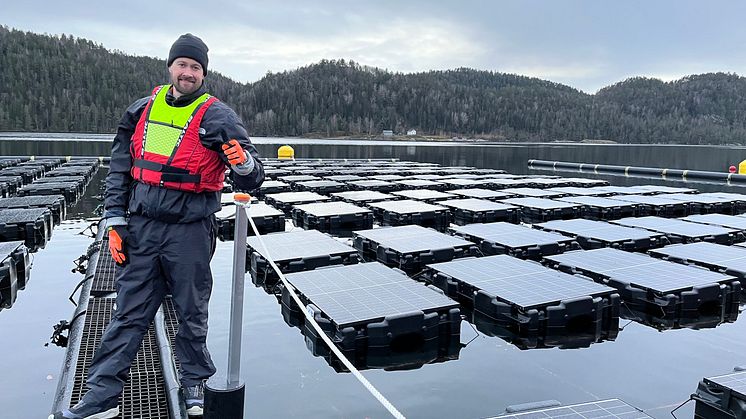
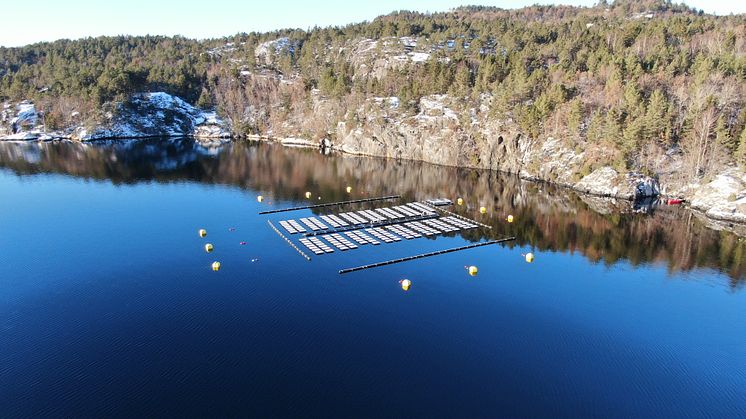
Our BRIZO pilot project in Risør, Norway, recently underwent an important technical upgrade where all floating modules were replaced with newly designed, blow-molded versions.
The pilot site in Risør serves as a dynamic testing ground, where we bring our engineering concepts to life through real-world implementation. But what does a day replacing all floating modules at our BRIZO site look like
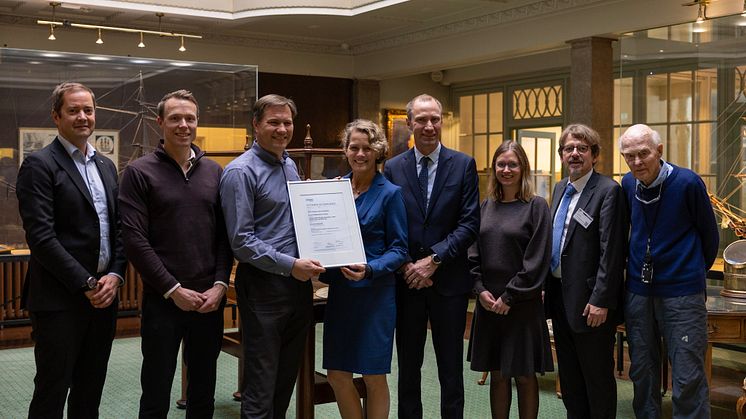
Fred. Olsen 1848 is pleased to announce that BRUNEL Floating Foundation, a leading initiative in the floating offshore wind market, has completed its comprehensive basic design phase according to DNV’s recently updated certification scheme for floating wind, DNV-SE-0422, and was subsequently awarded a DNV Basic Design Certification as one of few foundation designs in the industry.
Fred. Olsen 1848 is proud to announce that the 50x50 meter, 124 kW pilot project in Risør, Norway has successfully been deployed at sea and will be commissioned during spring. It has been a very educating and exciting process, where we take away additional knowledge and know-how for the next phases to come for our floating solar solution, BRIZO.
Our pilot project in Risør serves as a testin
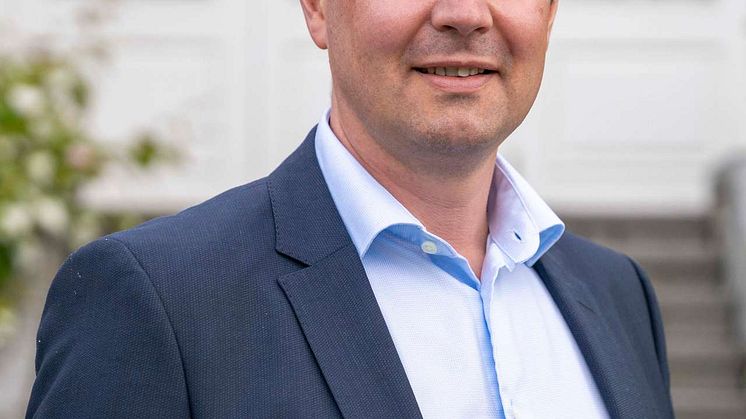
Fred. Olsen 1848 welcomes Per Arvid Holth as its new CEO. Per has since 2022 held the position as Chief Project Officer in Fred. Olsen 1848 developing the company’s projects in floating solar and floating wind. He brings along extensive knowledge from various Fred. Olsen-related companies, joining Fred. Olsen Energy from DNV in 2012, Fred. Olsen Windcarrier in 2019 and later Fred. Olsen Ocean
The main challenge for floating solar, particularly in marine environments, is how to handle wave loads in combination with wind. Fred. Olsen 1848 now launches its proprietary solution to this challenge; BRIZO.
BRIZO allows the PV modules to move freely and independently within a rope mesh, distributing the forces to the mooring system. As a result, BRIZO handles both wave and wind loads.

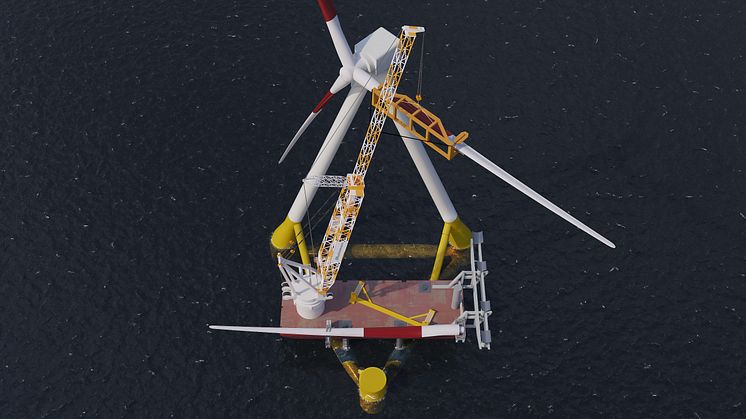
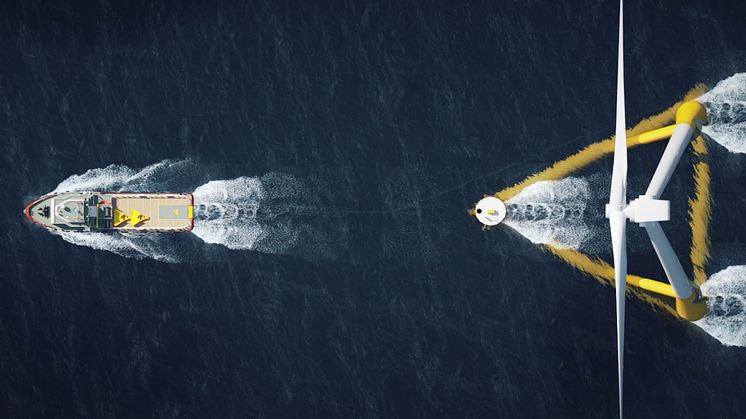
Based on a holistic approach to floating wind, Fred. Olsen 1848 is developing a complete O&M solution and operational procedure for major component exchange that is optimized for the floating foundation BRUNEL. The BRUNEL Maintenance Solution will enable large component exchange directly at the floating offshore wind site in a safe and cost-efficient manner. This reduces project risk and avoid